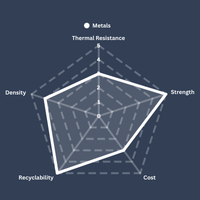
Metals are strong, ductile, and conductive materials widely used in construction, transportation, and electronics.
Metals consist of metallic elements (such as iron, aluminum, copper) and their alloys (like steel and brass).
Their bonding structure allows high electrical and thermal conductivity, plastic deformation without fracture,
and superior mechanical strength compared to most material classes. Processing techniques such as alloying,
cold working, and heat treatments provide precise control over properties, making metals one of the most
versatile classes of materials. Due to their durability and recyclability, metals remain the backbone of
industrial development.
Examples
Copper Wires (Metal)
Aluminum Cans (Metal)
Steel Bridge (Metal)
Polymers
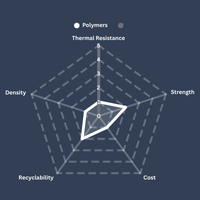
Polymers are lightweight, flexible, and low-cost materials built from repeating molecular chains, used extensively in consumer products.
Polymers are composed of long-chain molecules with covalent bonds along the backbone and secondary interactions between chains.
They are categorized into thermoplastics, thermosets, and elastomers. While they lack the strength and heat resistance of metals
and ceramics, their low density, design flexibility, and cost-effectiveness have made them indispensable in packaging, textiles,
and structural components. Advances in polymer chemistry enable applications in biomedicine, electronics, and sustainable materials
through biodegradable and bio-based alternatives.
Examples
Rubber Tires (Polymer)
Plastic Bottles (Polymer)
3D Printing Filament (Polymer)
Ceramics
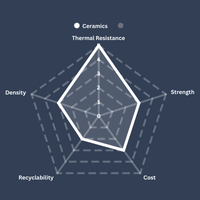
Ceramics are hard, brittle, and heat-resistant materials used in construction, aerospace, and electronics.
Ceramics are inorganic, non-metallic solids with ionic or covalent bonding. Their strong atomic bonds yield excellent hardness,
wear resistance, and thermal stability, but also brittleness under tensile stress. Traditional ceramics include clay, porcelain,
and glass, while advanced ceramics such as alumina, zirconia, and silicon carbide are tailored for high-performance applications
like cutting tools and biomedical implants. Their chemical inertness makes them ideal for environments involving corrosion,
oxidation, or high temperatures.
Examples
Brick (Concrete)
Glass Building (Ceramic)
Mug (Ceramic)
Composites
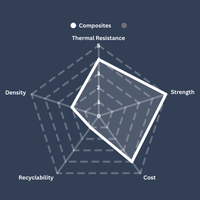
Composites combine two or more materials to achieve superior mechanical and functional performance.
Composites are engineered by combining a reinforcing phase (fibers, particles) with a matrix (polymer, metal, or ceramic).
The synergy of these phases provides properties not attainable by individual constituents, most notably high strength-to-weight
ratios and tailored stiffness. Carbon fiber–reinforced polymers and fiberglass exemplify structural composites, while newer
classes like ceramic matrix composites (CMCs) expand use into aerospace propulsion and nuclear reactors. Their main limitations
include high cost and poor recyclability, but they dominate high-performance sectors such as aerospace, automotive, and sports
engineering.
Examples
Boat Hull (Composite)
Airplane Wing (Composite)
Carbon Fiber Tubes (Composite)
Semiconductors
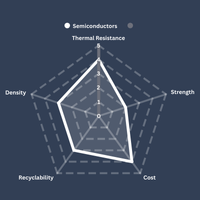
Semiconductors are materials with tunable electrical conductivity, foundational to modern electronics.
Semiconductors such as silicon, germanium, and gallium arsenide have band gaps that allow controlled electron flow.
Their conductivity can be precisely manipulated by doping with impurities, enabling their role in transistors, diodes,
and integrated circuits. Beyond computing, semiconductors are crucial for optoelectronics, including LEDs, lasers, and
solar cells. Their moderate density and cost reflect their balance between raw material abundance (silicon) and specialized
fabrication processes (chip manufacturing). Thermal management remains a critical design consideration in semiconductor devices.
Examples
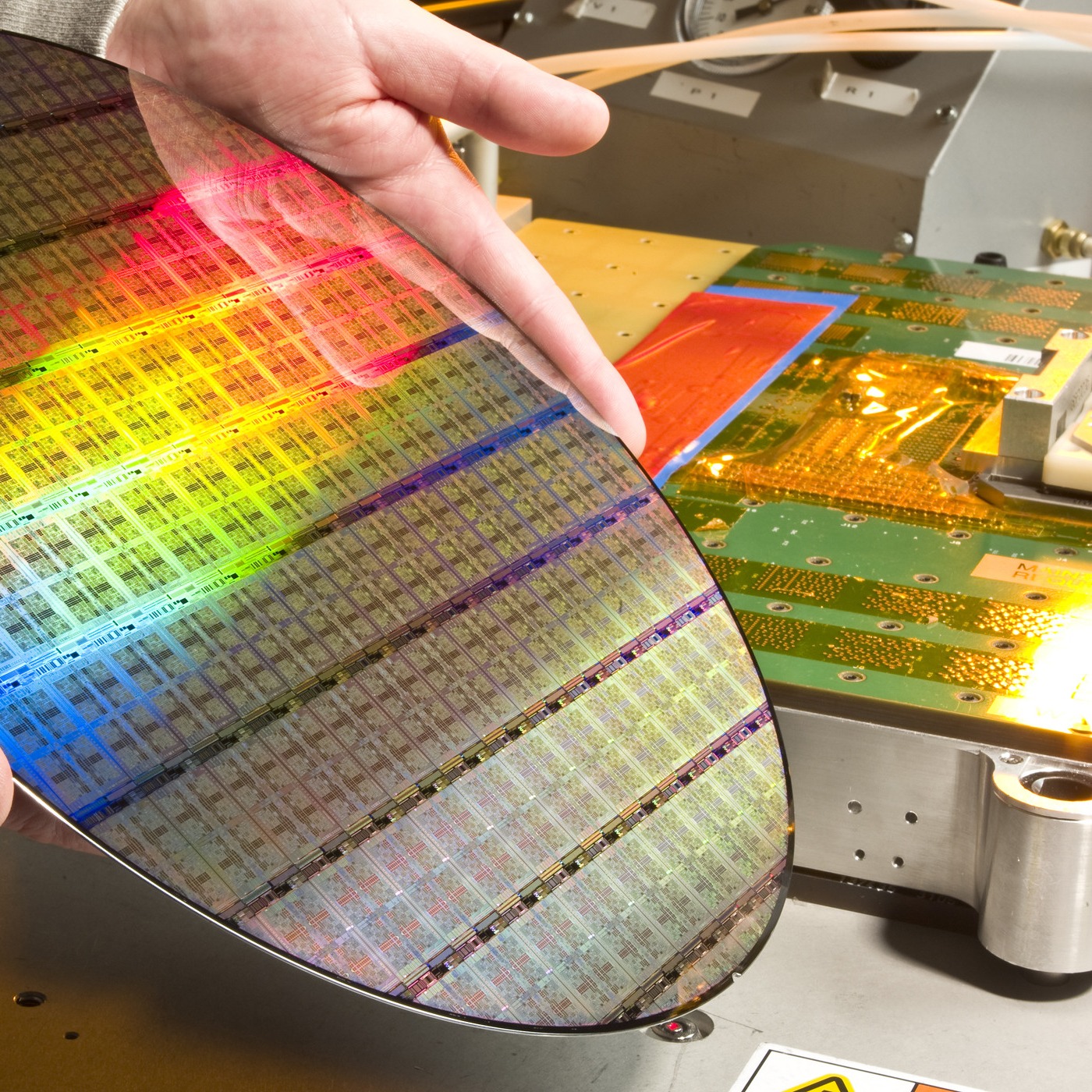
Wafer (Semiconductor)
Solar Panels (Semiconductor)
CPU (Semiconductor)
Nanomaterials
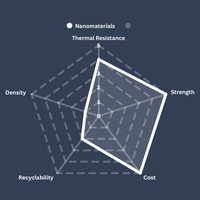
Nanomaterials exploit structures at the nanometer scale, where quantum and surface effects dominate.
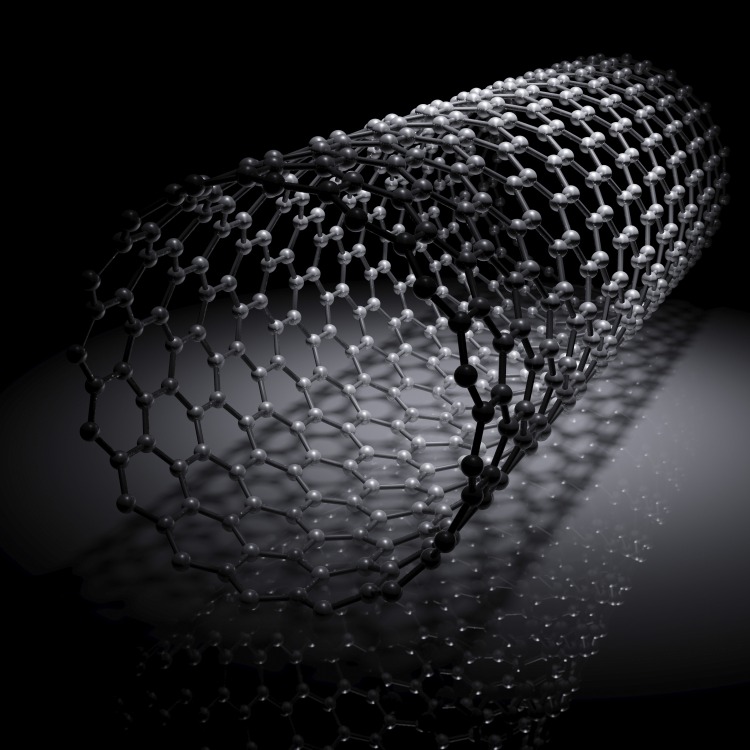
Nanomaterials include graphene, carbon nanotubes (CNTs), and quantum dots. At the nanoscale, materials exhibit extraordinary
mechanical strength, thermal conductivity, and unique optical/electronic behaviors not seen in their bulk counterparts.
For example, graphene demonstrates tensile strengths over 100× greater than steel at a fraction of the weight. These properties
have driven applications in nanoelectronics, drug delivery, advanced composites, and energy storage. However, high production
costs and recyclability concerns remain major barriers to widespread adoption.
Examples
Carbon Nanotube (Nanomaterial)
Quantum Dots (Nanomaterial)
Graphene Sheet (Nanomaterial)
Biomaterials
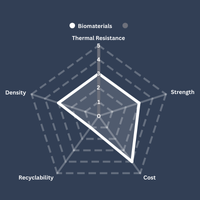
Biomaterials are designed to safely interact with biological systems, often for medical and healthcare applications.
Biomaterials encompass metals (titanium alloys), polymers (hydrogels), ceramics (bioglass), and composites specifically engineered
for biocompatibility and biofunctionality. They serve in implants, prosthetics, drug delivery systems, and tissue engineering
scaffolds. The key requirement is integration with biological tissues without eliciting adverse immune responses. Modern biomaterials
are increasingly designed for biodegradability and active roles in healing (e.g., bioresorbable stents). While costly and not
typically recyclable, they are critical in advancing modern medicine.